tageBuilder
Python-based sim/eval tool for TAGE-like branch predictors.
Overview
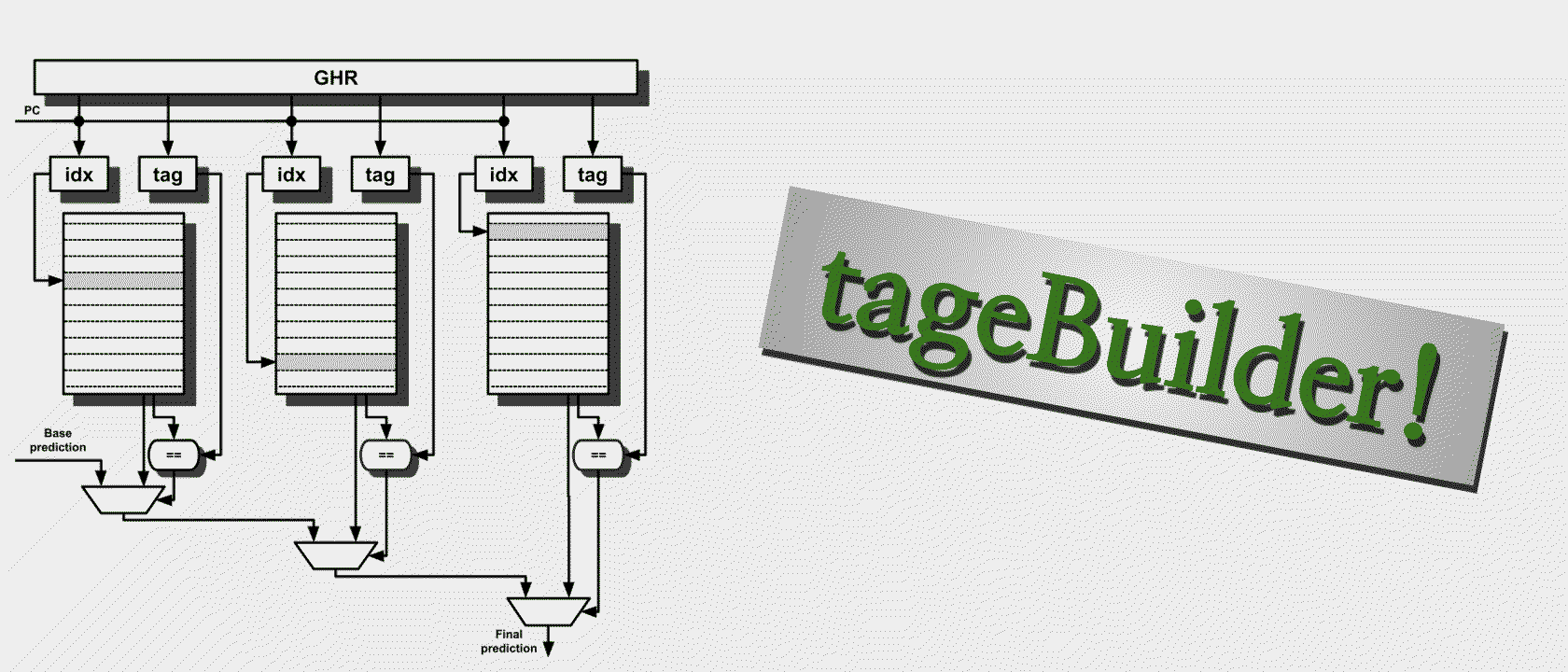
tageBuilder is a Python-based simulator and performance evaluation tool for TAGE-like branch predictors. It offers configurable parameters for modeling TAGE predictors and is optimized for performance with Numba and NumPy. Predictor performance can be evaluated with 200+ branch trace datasets from the 2016 Championship Branch Prediction (CBP2016) environment and generates detailed performance metrics.
TAGE predictors are state-of-the-art branch predictor design. If you are curious about their details, check out resources.
Features
-
Customizable Predictor Model:
Configure aspects such as tagged components (number, history length, tag width) and base predictor settings (prediction bits, hysteresis bits) via a YAML spec file.The tool does not model non-tagged components (except for the base predictor) such as the loop predictor and the statistical corrector.
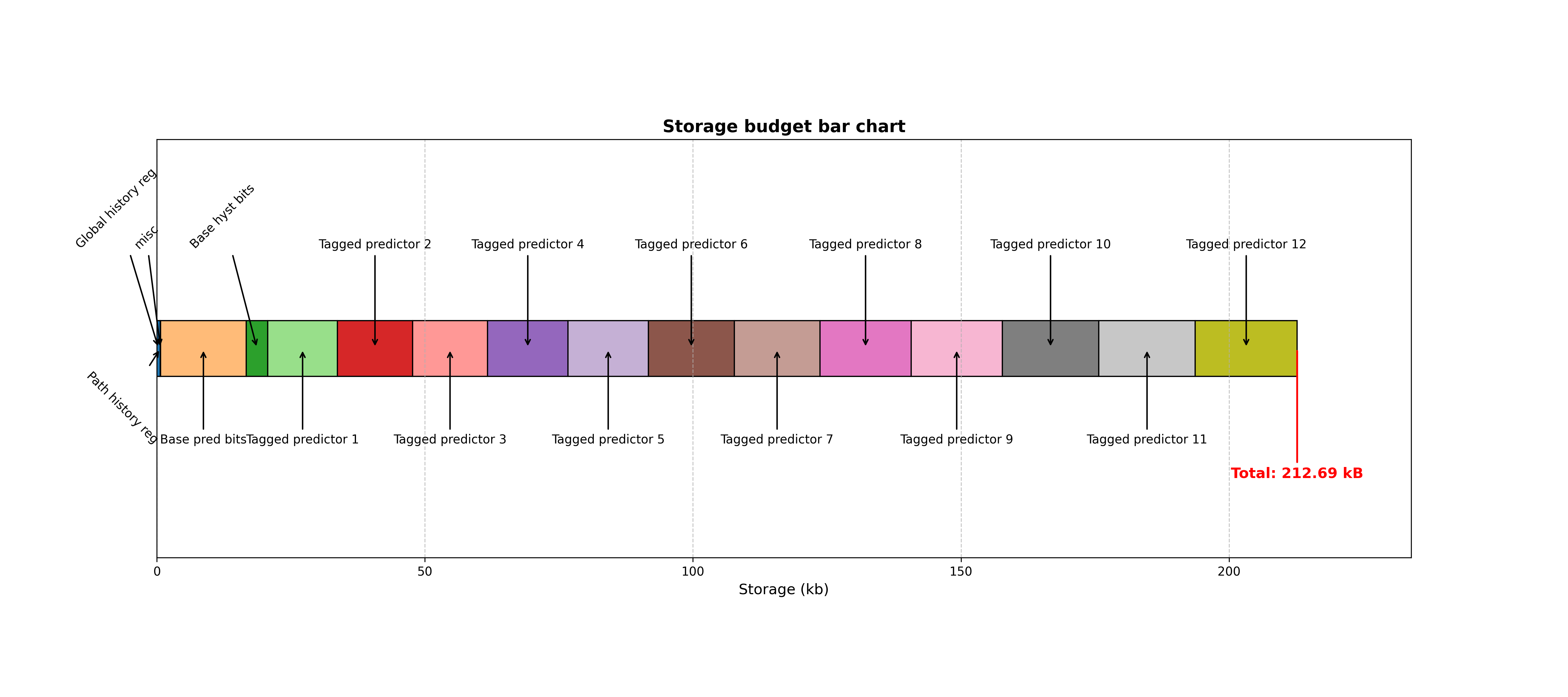
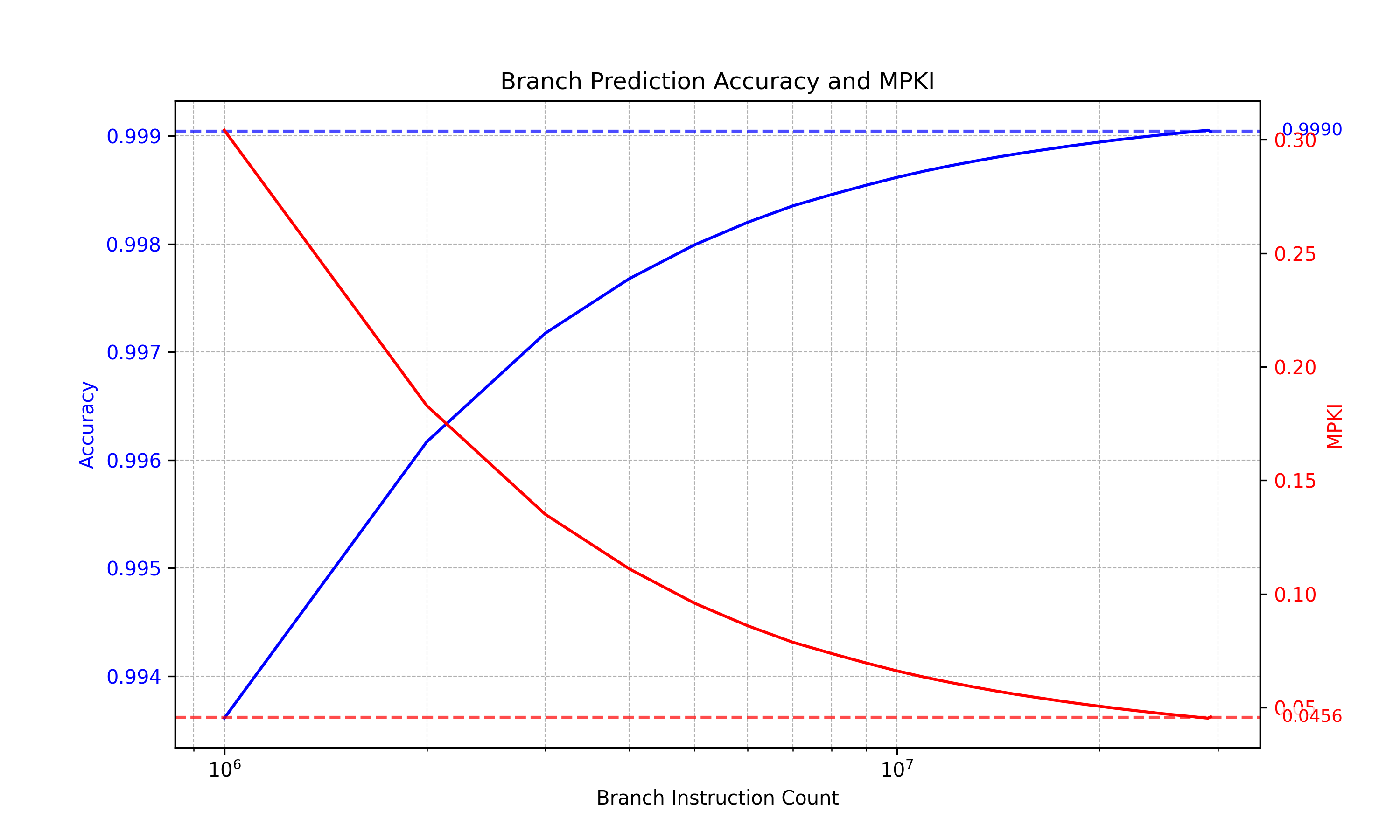
A predictor with 12 tagged components with total space of 212Kb scored accuracy of 95%> and MPKI of 1~3 for most traces.
-
Optimized Simulation:
Uses Numba JIT and NumPy vectorized operations to process ~700,000 branch sequences per second per simulation process. -
Batch Processing:
Supports batch prediction and updates for efficient data flow. -
Real-World Trace Integration:
Works with BT9-formatted branch trace files from CBP2016, reverse-engineered to meet the tool’s requirements. -
Comprehensive Evaluations:
Generates metrics and visualizations including MPKI, accuracy graphs, memory usage charts, misprediction statistics, branch class analysis, and CSV outputs for further analysis. -
Parallel Processing:
Runs multiple traces in parallel processes to speed up evaluations.
Technical Details
currently adding more details
Configuration
tageBuilder uses a YAML configuration file to define predictor parameters. This allows users to easily adjust the following:
- Number and configuration of tagged components
- Base predictor settings (e.g., prediction bits, hysteresis bits)
- Global predictor parameters (e.g., path history length, usefulness bit duration)
Below is an example predictor spec with one base bimodal predictor and 4 tagged predictors.
global_config:
    phist_len: 16
    u_duration_log: 19
tables:
    - name: base
      isBase: true
      hist_len: 0
      num_pred_entries_log: 14
      num_hyst_entries_log: 12
      tag_width: 0

    - name: t1
      isBase: false
      hist_len: 8
      num_pred_entries_log: 10
      num_hyst_entries_log: 0
      tag_width: 8

    - name: t2
      isBase: false
      hist_len: 12
      num_pred_entries_log: 10
      num_hyst_entries_log: 0
      tag_width: 9

    - name: t3
      isBase: false
      hist_len: 18
      num_pred_entries_log: 10
      num_hyst_entries_log: 0
      tag_width: 9

    - name: t4
      isBase: false
      hist_len: 27
      num_pred_entries_log: 10
      num_hyst_entries_log: 0
      tag_width: 10
Data Input
The tool accepts branch trace files in the BT9 format, compatible with the CBP2016 traces.
Output
check tageBuilder/docs/example_sim_output.tar.gz for output example.
TAGEbuilder produces several outputs:
- Visualizations for memory usage by predictor components
- Graphs for MPKI and accuracy
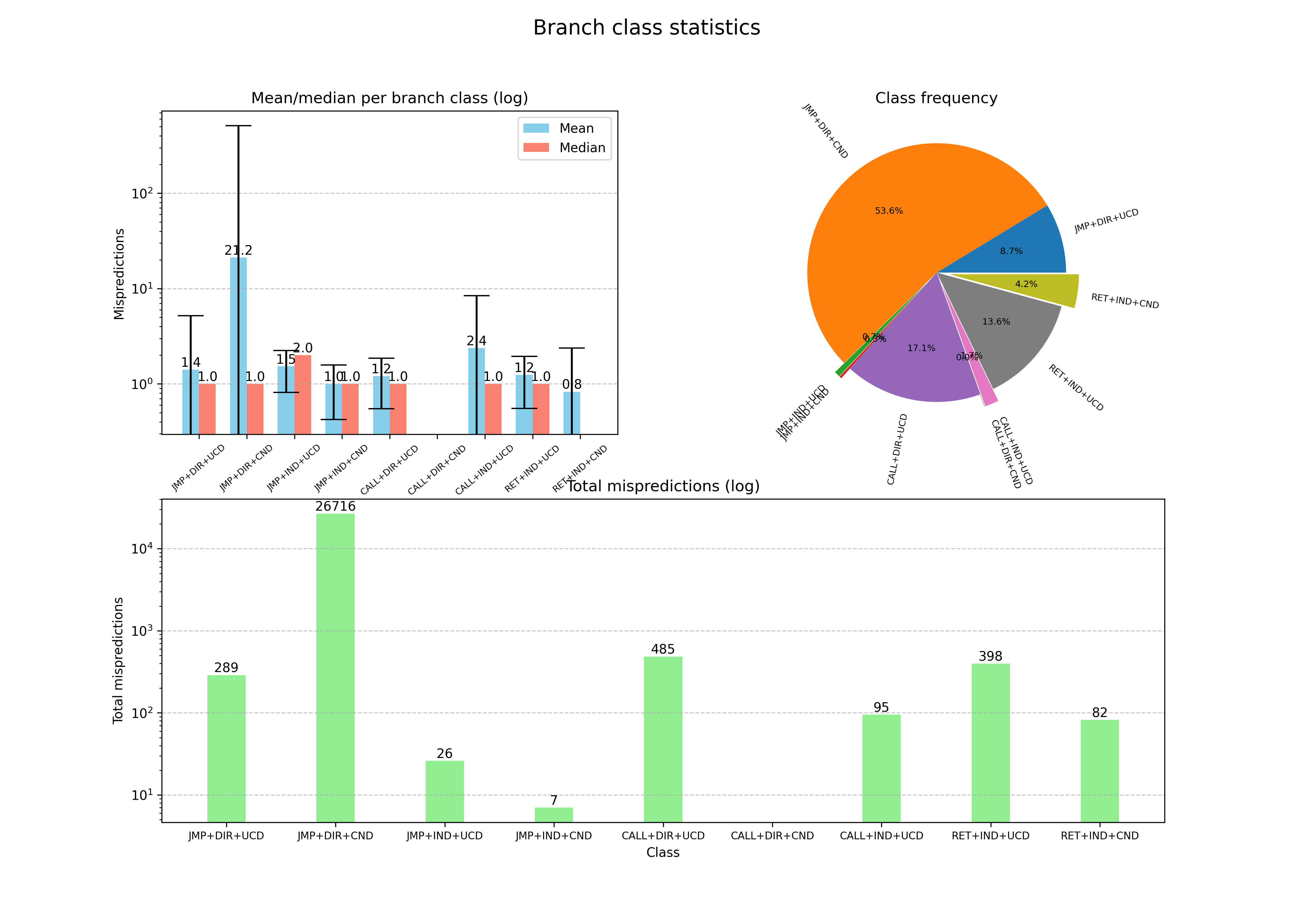
- Statistics on mispredictions per branch PC and branch class analysis
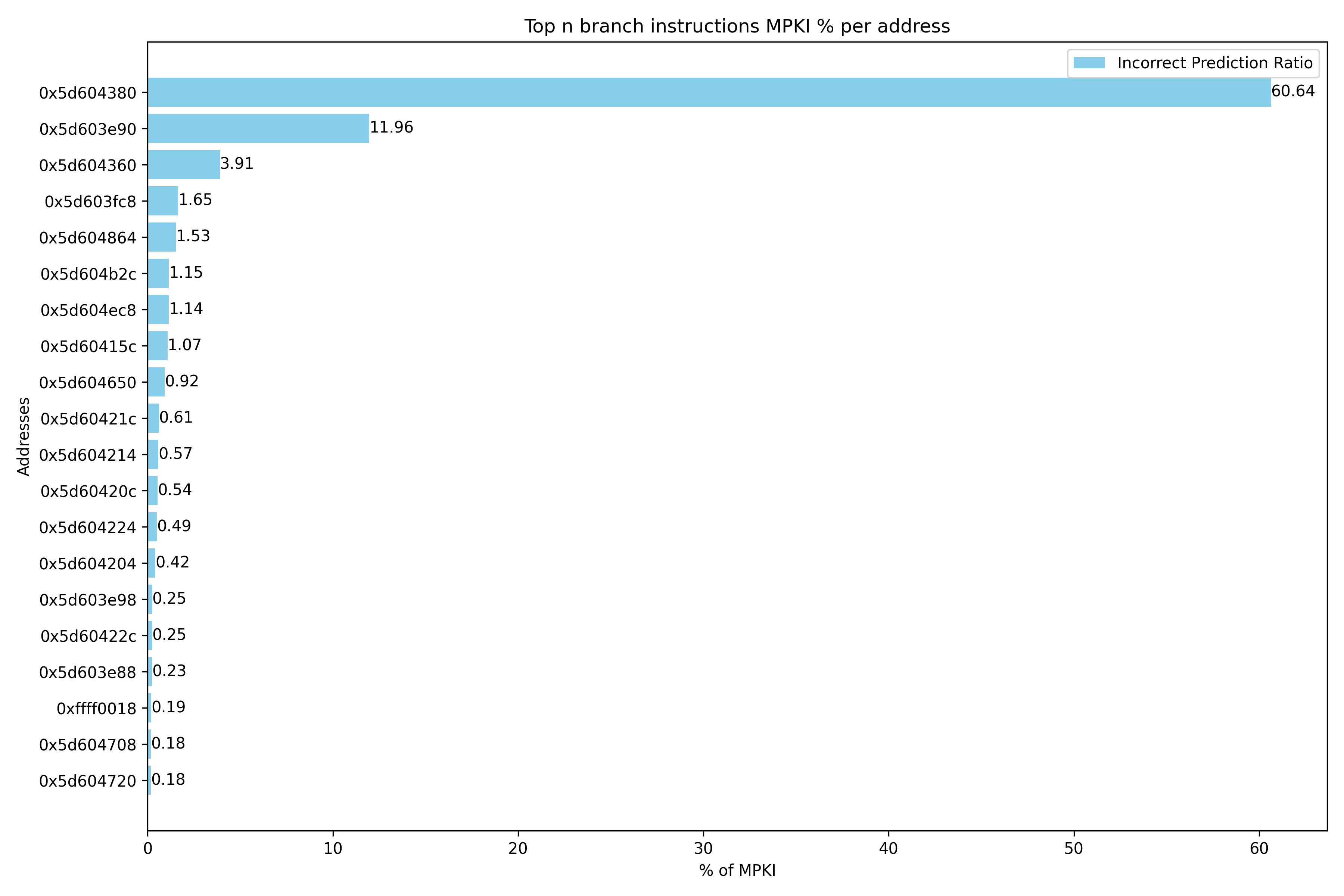
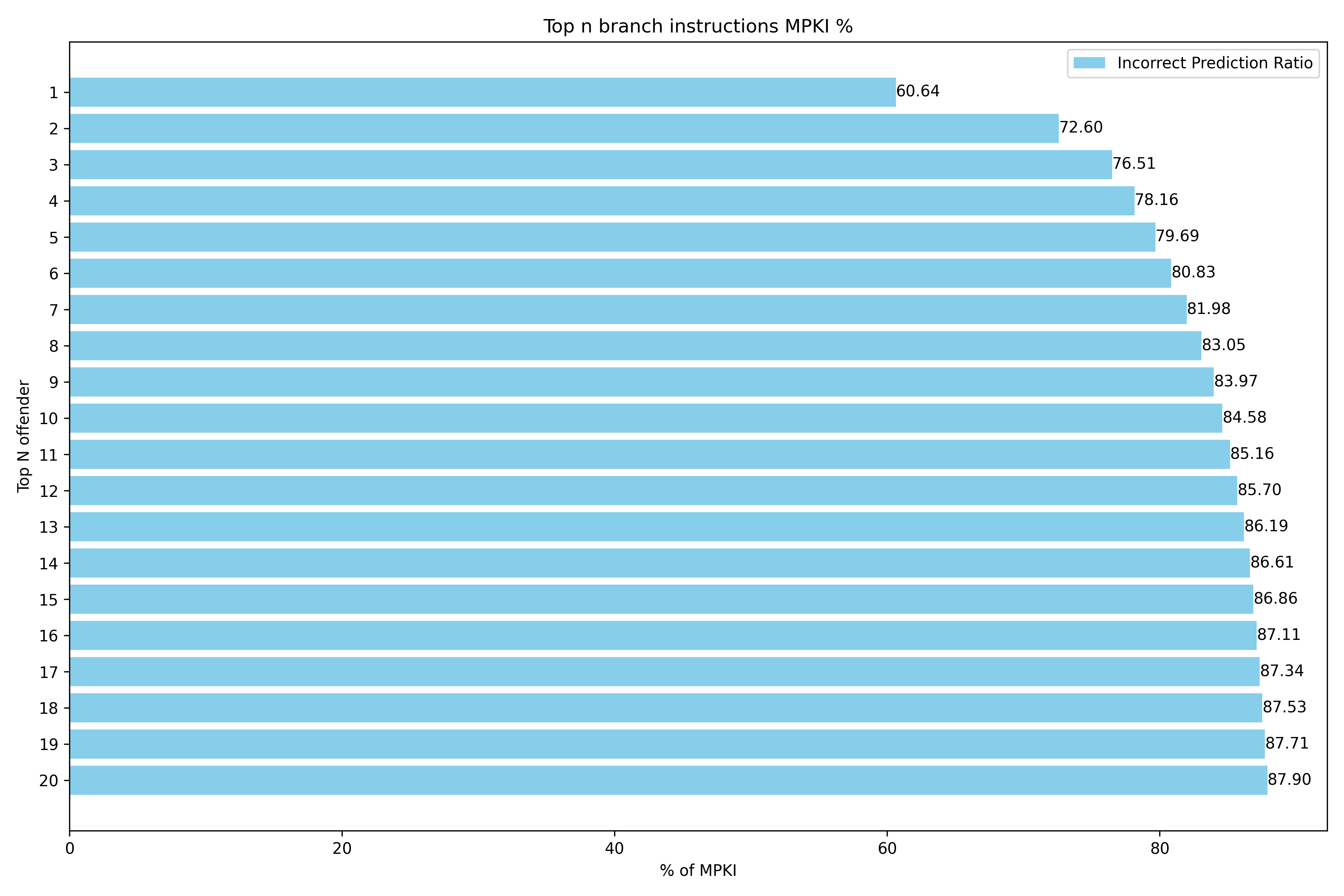
- CSV files summarizing simulation results (per predictor, per branch PC address, general MPKI/accuracy)